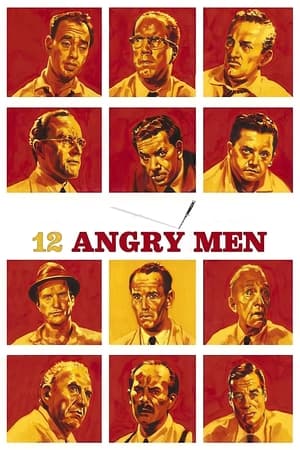

12 Angry Men (1957) Synopsis — A Gripping Masterpiece of Justice and Doubt
Synopsis of 12 Angry Men (1957)
In the critically acclaimed 1957 courtroom drama, 12 Angry Men, directed by Don Kranze, audiences are thrust into a suffocatingly tense jury room where a single vote stands between a young man and the death penalty. This powerful film, based on Reginald Rose’s teleplay, begins as the 12 jurors are tasked with deliberating the fate of a teenager accused of murdering his father. What appears to be a straightforward verdict quickly unravels into a profound exploration of justice, prejudice, and the human psyche.
As the jurors begin their discussions, the overwhelming consensus leans towards a guilty verdict. However, one dissenting voice emerges, Juror 8, portrayed with quiet conviction. He believes there is reasonable doubt and insists that every man deserves a thorough examination of the facts before condemning him to capital punishment. This initial disagreement ignites a firestorm of debate, forcing each juror to confront their own biases, preconceptions, and personal experiences that shape their views on the case, the accused, and their fellow jurors.
The film masterfully portrays the escalating tension and psychological warfare that unfolds within the confines of the jury room. With the clock ticking and the pressure mounting, the jurors, initially strangers united by a civic duty, become entangled in a deeply personal and often acrimonious debate. The matter of life and death hangs precariously in the balance as they dissect every piece of evidence, question every witness testimony, and grapple with the immense responsibility placed upon them. This gripping narrative serves as a timeless reminder of the importance of critical thinking and the inherent complexities of the justice system.
Plot of 12 Angry Men — A Gripping Story
The central conflict of 12 Angry Men (1957) is established immediately: twelve jurors must reach a unanimous decision regarding the guilt or innocence of a young man accused of murder. The prosecution has presented its case, the defense has made its arguments, and now the jury is sequestered to deliberate. Initially, the majority of the jurors are eager to quickly confirm the boy’s guilt and adjourn for the day, viewing the evidence as conclusive and the case as open and shut.
However, Juror 8, played by an ensemble cast including Martin Balsam, John Fiedler, Lee J. Cobb, E.G. Marshall, and Jack Klugman, refuses to go along with the prevailing sentiment. His insistence on exploring every angle and the possibility of reasonable doubt forces the other eleven jurors to re-examine their assumptions. Through intense dialogue, heated arguments, and meticulous scrutiny of the trial’s details, including the reliability of witnesses and the feasibility of the crime itself, the jurors are compelled to confront their own prejudices and the potential flaws in the legal process.
The plot of 12 Angry Men (1957) is a character study, showcasing how individual beliefs, socioeconomic backgrounds, and emotional baggage can influence the perception of truth and justice. The confined setting of the jury room becomes a microcosm of society, highlighting the challenges of achieving consensus and the courage it takes to stand alone for what one believes is right, even in the face of overwhelming opposition. The film’s power lies in its meticulous dissection of a single court case and the dramatic revelation of the human element that underpins the legal system.
Interesting Facts About 12 Angry Men
- The film was originally a teleplay written by Reginald Rose in 1954 for CBS’s “Studio One in Hollywood” anthology series. The success of the television production led to its adaptation into the feature film.
- Director Sidney Lumet (not Don Kranze for this version), who would go on to direct other acclaimed films like “Serpico” and “Dog Day Afternoon,” made his directorial debut with this movie.
- The entire film, aside from establishing shots, was filmed on a single set within the jury room. This deliberate choice enhances the claustrophobic and intense atmosphere.
- The film is celebrated for its all-male jury, a reflection of the societal norms of the time. Modern adaptations might explore a more diverse jury composition.
Why You Should Watch 12 Angry Men (1957)
12 Angry Men (1957) remains a quintessential example of brilliant filmmaking, a testament to the power of dialogue-driven storytelling and exceptional acting. Its enduring relevance lies in its unflinching examination of the American justice system, the biases that can infect our judgments, and the vital importance of dissenting voices. This black and white cinematic gem offers a profound and thought-provoking experience that transcends its era, reminding viewers of the weight of civic responsibility and the pursuit of truth.
If you appreciate intelligent dramas that delve into human nature and societal issues, 12 Angry Men (1957) is an absolute must-watch. It’s a masterclass in tension-building, character development, and delivering a powerful message without resorting to sensationalism. The film’s legacy as a powerful piece of cinema and a compelling courtroom drama is undeniable, making it a truly unforgettable viewing experience.
Cast of 12 Angry Men (1957)
| Actor | Role |
|---|---|
| Martin Balsam | Juror 1 |
| John Fiedler | Juror 2 |
| Lee J. Cobb | Juror 3 |
| E.G. Marshall | Juror 4 |
| Jack Klugman | Juror 5 |
| Edward Binns | Juror 6 |
| Jack Warden | Juror 7 |
| Henry Fonda | Juror 8 |
| Joseph Sweeney | Juror 9 |
| Ed Begley | Juror 10 |